
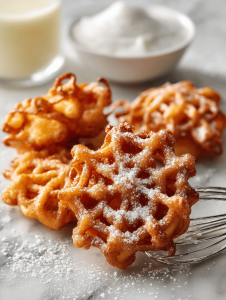
Spiderweb donuts aren’t just about the sweet crunch; they’re about the thrill of creating something both spooky and beautiful. I first made these for a Halloween party, and the web patterns turned out more chaotic than planned, but that’s part of the charm. There’s a kind of mad joy in piping those intricate webs and watching them fry up crackled and perfect.
Why Do I Keep Making These?
Every batch feels like a tiny rebellion, a chance to carve out chaos in the kitchen. The web patterns crackle with a smoky, sweet aroma that makes every mess worth it. Plus, the imperfect webs are oddly satisfying—each one a unique masterpiece of sweet, crispy chaos.
Web Ingredients & Their Secrets
- Flour: Gives structure; all-purpose works fine, but bread flour creates more chewiness.
- Sugar: Sweetens and helps browning; superfine dissolves faster for a smoother web.
- Yeast: Leavens dough, making the donuts light; proof until bubbly for best rise.
- Milk: Adds richness; can swap with almond or oat milk for allergy-friendly versions.
- Butter: Creates a tender crumb; melted butter integrates easily, but margarine works in a pinch.
- Egg: Bind and enrich; flaxseed or chia gel can be a vegan alternative.
- Oil for frying: Neutral oil like vegetable or canola; adds crispness and a shiny finish.
Tools of the Web-Making Trade
- Rolling pin: To thin out the dough to the perfect web-donut size.
- Piping bag or plastic sandwich bag: For creating the web patterns with precision.
- Deep-fry thermometer: To monitor oil temperature for perfect frying.
- Slotted spoon: To lift out the donuts without breaking the web pattern.
The Twists and Turns of Making Spiderweb Donuts
Step 1: Mix flour, sugar, yeast, and a pinch of salt in a big bowl. Let it sit for 5 minutes until frothy.
Step 2: Add milk, melted butter, and an egg. Knead until smooth, about 8 minutes.
Step 3: Cover with a damp cloth, let rise in a warm spot for 1 hour or until doubled.
Step 4: Divide dough into small balls, about the size of a walnut.
Step 5: Roll each ball into a thin disc, about 15 cm diameter.
Step 6: Using a piping bag or a plastic bag with the corner cut off, pipe a web-like pattern on each disc.
Step 7: Heat oil in a deep pan to 180°C (356°F). Fry donuts in batches, about 2 minutes each side, until golden.
Step 8: Remove with a slotted spoon, drain on paper towels.
Step 9: Dust with powdered sugar or drizzle with chocolate for a finishing touch.
Cooking Checkpoints & Tips for Success
- The dough should be soft but not sticky; if it’s too sticky, add a little more flour.
- Oil temperature must stay around 180°C (356°F); too hot and the donuts burn, too cold and they absorb oil.
- Web patterns should be quick and confident; slow piping makes for uneven webs.
- Watch for a golden color; if they’re too dark too fast, lower the heat.
Common Web-Wrinkles & How to Fix Them
- Dough is too dry or stiff.? FORGOT to keep dough moist → Mistake: Web pattern cracks during piping. Fix: Keep the dough covered and lightly dampen if it dries out.
- Oil temp fluctuates too much.? DUMPED in hot oil too quickly → Mistake: Donuts burn or cook unevenly. Fix: Lower the web-patterned dough gently and wait for oil to stabilize at 180°C.
- Donuts brown too fast.? OVER-TORCHED web pattern → Mistake: Webs turn dark and bitter. Fix: Reduce heat and cook in smaller batches.
- Web pattern looks uneven.? MISSED the web pattern → Mistake: No web design. Fix: Practice piping on parchment first, then try on the actual donuts.

Spiderweb Donuts
Ingredients
Equipment
Method
- In a large mixing bowl, combine flour, sugar, yeast, and salt. Whisk together and let sit for 5 minutes until the mixture is frothy and bubbly, signaling active yeast.
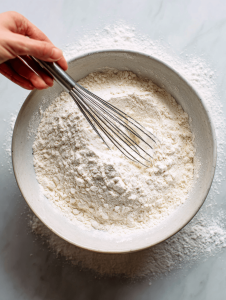
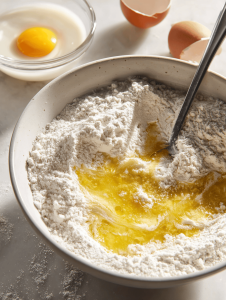
- Add warm milk, melted butter, and the egg to the dry mixture. Stir until the ingredients are just combined, then knead the dough on a lightly floured surface for about 8 minutes until smooth and elastic.
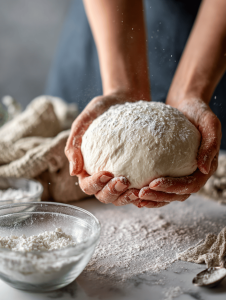
- Shape the dough into a ball, place it in a greased bowl, cover with a damp cloth, and let rise in a warm spot for about 1 hour or until it has doubled in size, filling the space with a yeasty aroma.
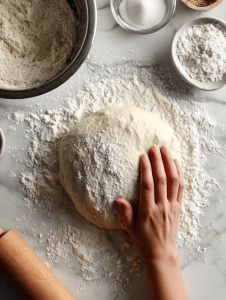
- Punch down the risen dough to release excess air then divide it into 8 equal portions. Roll each piece into a small ball, then flatten into a thin disc about 15 cm in diameter with a rolling pin.
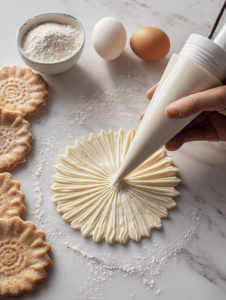
- Fill a piping bag or plastic sandwich bag with a corner cut off with the dough. Pipe web-like patterns on each disc—start from the center and draw radial lines, then connect them with curved lines to resemble a spiderweb.
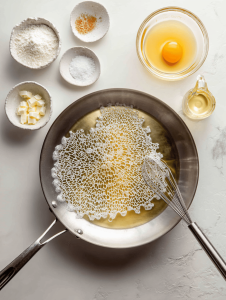
- Heat oil in a deep pan to 180°C (356°F). Carefully lower each web-patterned disc into the hot oil, frying in batches. Cook for about 2 minutes on each side until the donuts are golden brown and crispy, with a crackled web surface.
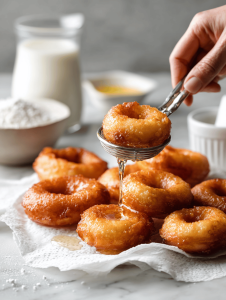
- Use a slotted spoon to lift out the fried donuts, then drain on paper towels to remove excess oil. Repeat with remaining dough discs.
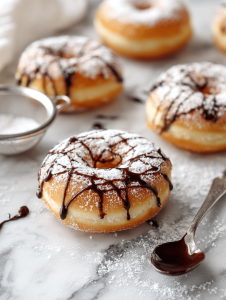
- Once cooled slightly, dust the donuts with powdered sugar or drizzle with melted chocolate for a spooky finishing touch.
- Enjoy your crispy, web-patterned donuts while they're warm and crackling—perfect for a Halloween celebration or a spooky dessert twist!
Notes

Hi, I’m Daniel Whitaker, the voice and recipe developer behind Broth Psychologist. I’m so glad you’re here. This little corner of the internet started as a way for me to share comfort through cooking, but it has grown into something much deeper.
 Hi, I’m Daniel Whitaker, the voice and recipe developer behind Broth Psychologist. I’m so glad you’re here.
This little corner of the internet started as a way for me to share comfort through cooking, but it has grown into something much deeper.
It’s where food meets feeling, and where simple ingredients tell meaningful stories.
Hi, I’m Daniel Whitaker, the voice and recipe developer behind Broth Psychologist. I’m so glad you’re here.
This little corner of the internet started as a way for me to share comfort through cooking, but it has grown into something much deeper.
It’s where food meets feeling, and where simple ingredients tell meaningful stories.


